Impact and Evidence

Proven results improving HIV outcomes, strengthening youth resilience, and transforming lives across Rwanda.
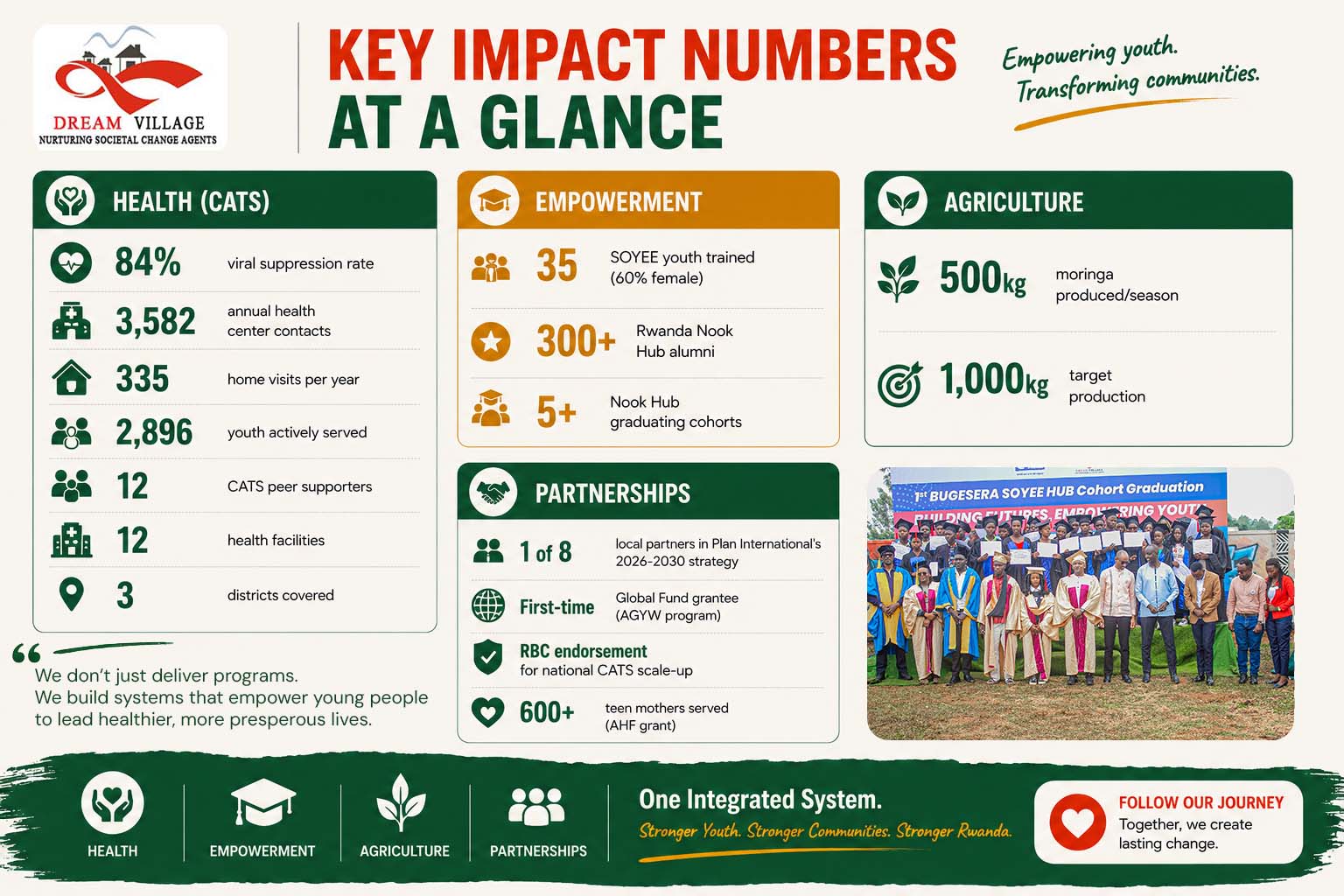
KEY IMPACT NUMBERS AT A GLANCE: HEALTH (CATS) 84% viral suppression rate 3,582 annual health center contacts 335 home visits per year 2,896 youth actively served 12 CATS peer supporters 12 health facilities 3 districts covered EMPOWERMENT 35 SOYEE youth trained (60% female) 300+ Rwanda Nook Hub alumni 5+ Nook Hub graduating cohorts AGRICULTURE 500kg moringa produced/season 1,000kg target production PARTNERSHIPS 1 of 8 local partners in Plan International's 2026-2030 strategy First-time Global Fund grantee (AGYW program) RBC endorsement for national CATS scale-up 600+ teen mothers served (AHF grant)
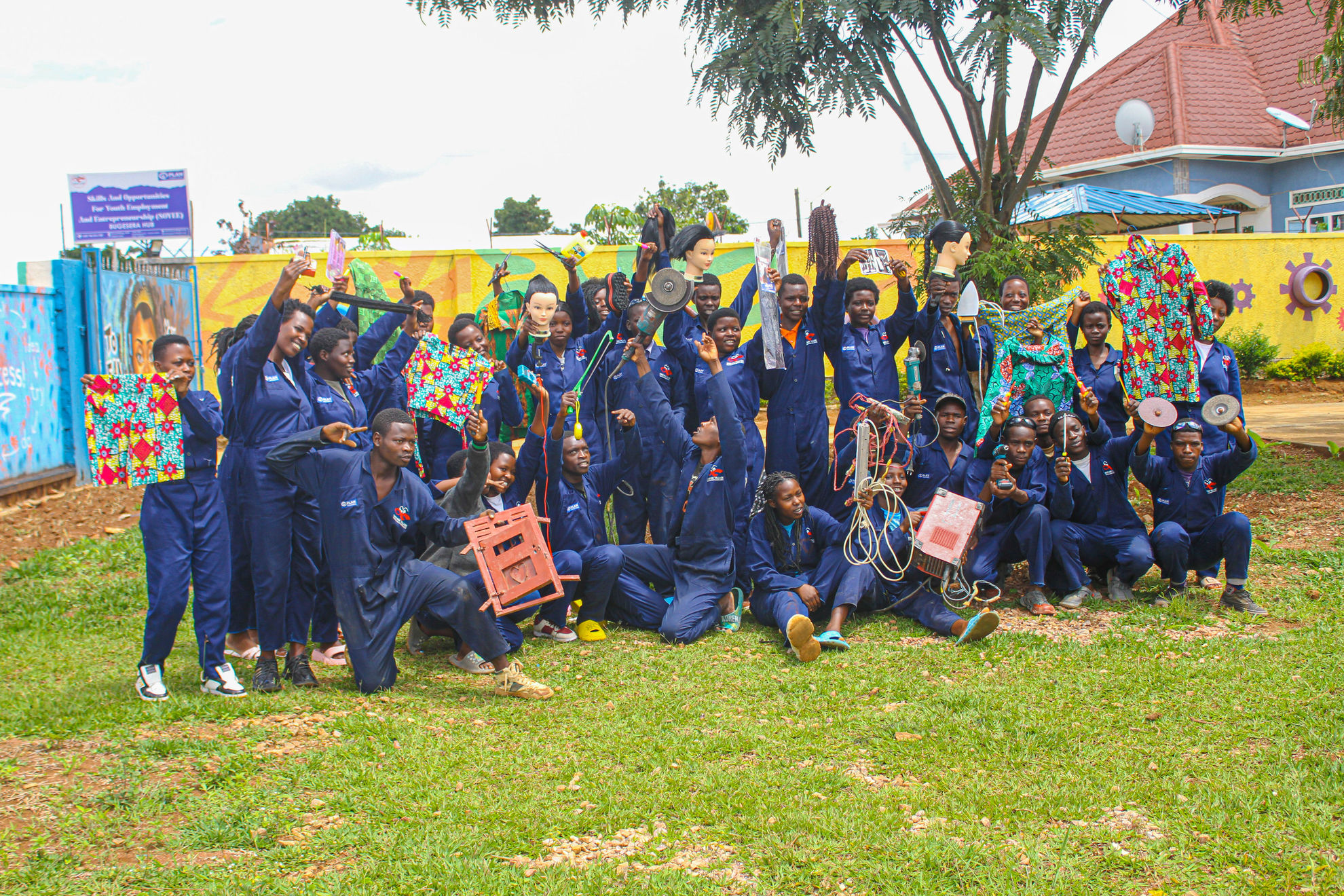
SOYEE Impact

A Proven Model Delivering Measurable Results

Evidence-driven impact across health, empowerment, and livelihoods.

Dream Village Rwanda delivers a peer-led, integrated system that improves HIV outcomes, transforms behavior, and builds economic independence for vulnerable young people.

Our impact is grounded in measurable results and continuous learning across all programs.

2025 Impact Overview

Key results from our integrated programs.

These results demonstrate the reach and consistency of our peer-led model.

Viral Suppression: The Gold Standard of HIV Care

Delivering exceptional HIV treatment outcomes.

Dream Village achieves an average 84% viral suppression rate across supported youth.

Among those with valid viral load results, suppression reaches 95.5%, exceeding international benchmarks.

Each suppressed viral load represents a young person living a healthy life and unable to transmit HIV.
Impact and Evidence group
No one left behind impact and evidence

CATS Model: Reach and Results

Peer-led support driving engagement and outcomes.

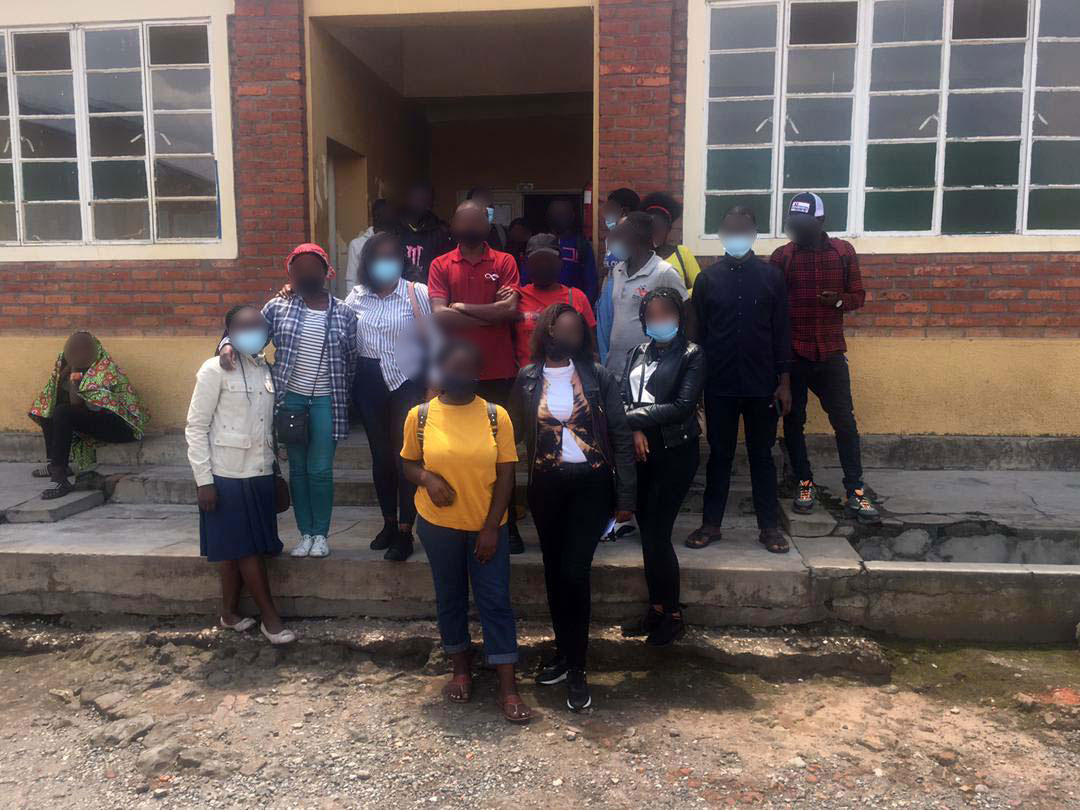
Our CATS model deploys trained peer supporters across 12 health facilities in Kigali.

Q1 2025 Results

Key results from our integrated programs.

This model combines trust, accessibility, and continuous support.

Early Detection and Immediate Care

Ensuring no HIV young person is left behind.

Dream Village facilitates HIV testing through schools, communities, and health facilities.

All individuals who test positive are immediately linked to care and supported through peer-led follow-up.

This results in a 100% linkage to care rate, a critical indicator of program effectiveness.
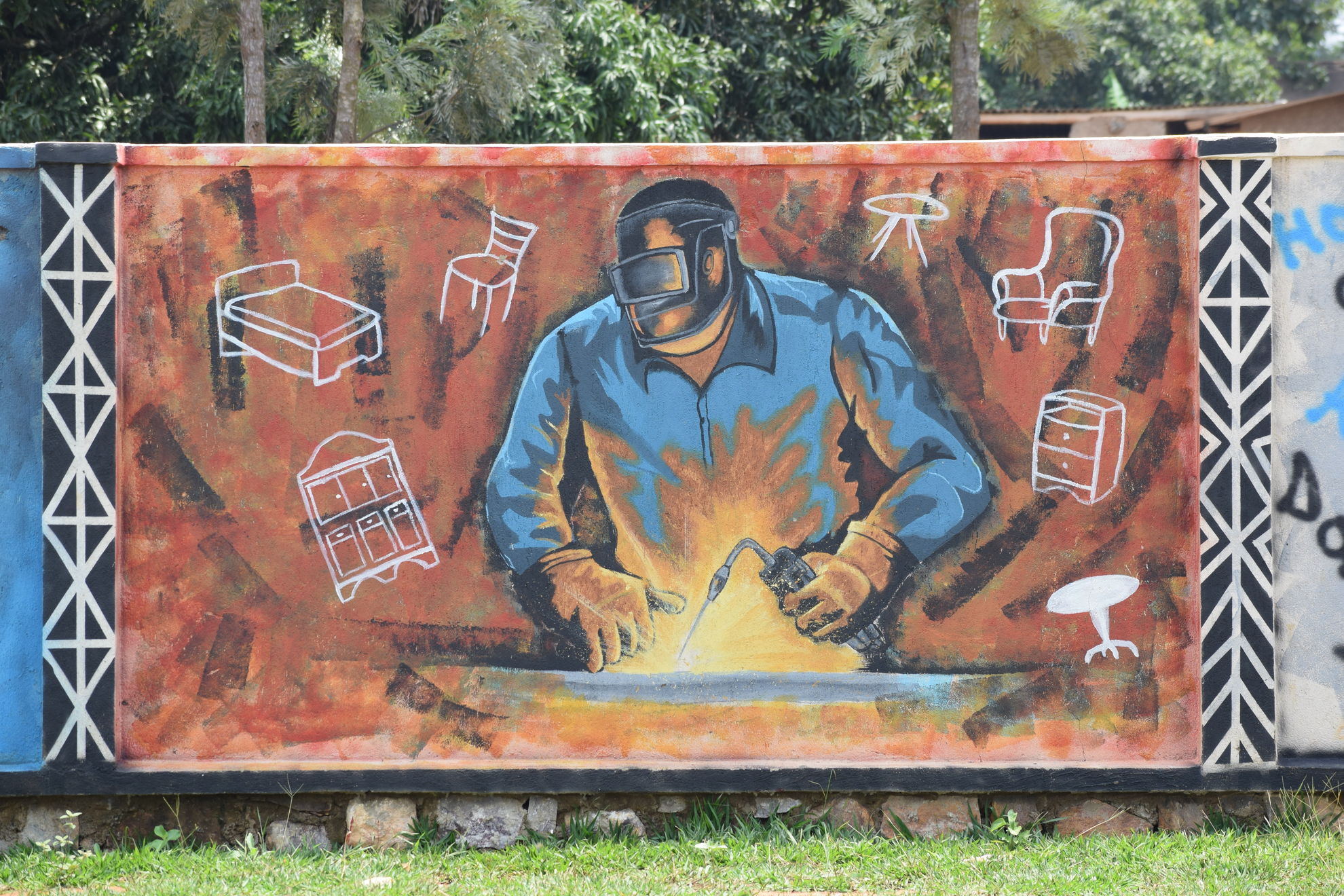
SOYEE Hub Nyamata ()

Building Skills and Economic Independence

Empowering young people beyond health.

Participants gain practical skills and become advocates for health and social change.

Sustainable Livelihoods Through Agriculture

Linking economic resilience with health outcomes.

Agriculture provides both economic opportunity and nutritional benefits for young people living with HIV.
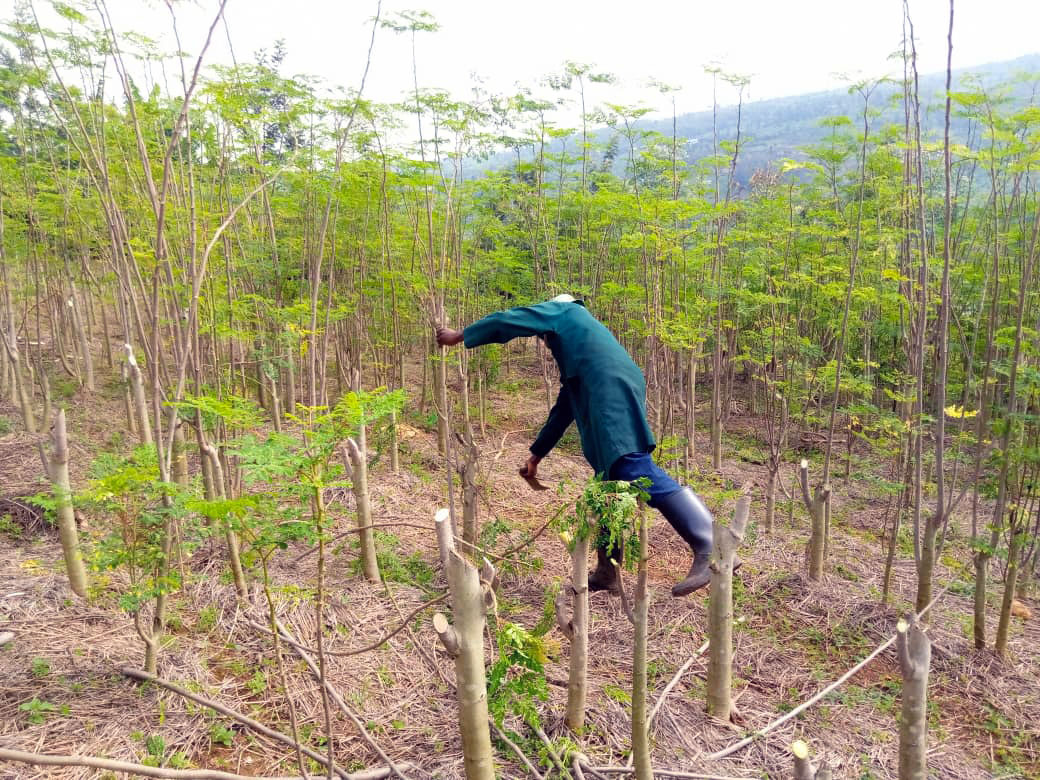
Moringa impact havesting moringa

Health and Economic Outcomes Are Connected

Addressing the real barriers young people face.

Grounded in Evidence and Best Practice

Building on proven models and global standards.

All programs are designed and implemented based on evidence and aligned with national and international standards.

Data-Driven and Accountable

Tracking results to improve impact and ensure transparency.

Dream Village collects and analyzes data across all programs, including:

This data informs decision-making, improves program quality, and ensures accountability to partners and donors.

Why Peer-Led Models Work

Trust, lived experience, and community connection.

Peer-led approaches succeed because they are built on trust.

Young people relate to others who share similar experiences. This reduces stigma, improves engagement, and leads to better outcomes.

Dream Village’s results are not accidental. They are the outcome of a model designed around how young people actually experience health and care.

Scale What Works

Support a proven model improving youth health outcomes in Rwanda.

Dream Village is delivering measurable results. With the right partnerships, this model can reach more young people and strengthen systems nationwide.

Frequently Asked Questions

Key information for donors, partners, and stakeholders interested in supporting adolescent girls and young women in Rwanda.

Dream Village has achieved strong results in improving youth health outcomes in Rwanda, including an average viral suppression rate of 84 percent among young people living with HIV, thousands of youth reached annually, and consistent engagement through community and health facility interventions.

Viral suppression means that the level of HIV in a person’s body is reduced to very low or undetectable levels. This allows individuals to live healthy lives and prevents transmission of HIV. It is the most important indicator of success in HIV treatment programs.

Dream Village uses a peer-led model where young people support others living with HIV. This approach builds trust, reduces stigma, and improves adherence to treatment, resulting in high viral suppression rates.

Dream Village reaches thousands of young people across Rwanda through integrated programs in health, empowerment, and livelihoods. In recent reporting periods, nearly 3,000 youth were served in a single quarter.

Dream Village collects program data through health facilities, community interventions, and structured monitoring systems. Data is regularly reviewed and aligned with national reporting standards to ensure accuracy and accountability.

Program success is measured through key indicators such as viral suppression rates, number of youth reached, HIV testing and linkage to care, and economic empowerment outcomes. These indicators provide a clear picture of both reach and impact.

Dream Village uses a data-driven approach with regular reporting, monitoring systems, and alignment with national and international standards. This ensures transparency, measurable results, and responsible use of funding.

The CATS model is central to Dream Village’s impact. It provides peer-led support that improves adherence to treatment, increases engagement with health services, and strengthens outcomes for young people living with HIV.

Economic stability allows young people to access transport, food, and healthcare services. By combining health programs with livelihood support, Dream Village addresses key barriers to treatment adherence and wellbeing.

Dream Village works closely with the Rwanda Biomedical Centre and contributes to national HIV strategies. Its programs are integrated into health systems and aligned with government priorities.

Yes. The model is designed for scale and has already been recognized by government institutions. With additional funding, it can expand to more districts and reach more young people nationwide.

Dream Village offers a proven, data-driven approach that delivers measurable results. Its integration with government systems, strong outcomes, and scalable model make it a high-impact investment for improving youth health in Rwanda.

Dream Village combines peer-led support, system integration, and economic empowerment. This integrated approach addresses the root causes of poor health outcomes, not just the symptoms.

By strengthening health systems, empowering young people, and contributing to national strategies, Dream Village creates sustainable impact that extends beyond individual programs.

Detailed reports, program data, and evidence of impact are available through Dream Village’s annual reports and partner reporting systems. Donors can also request additional data through direct engagement.